Our Assessments
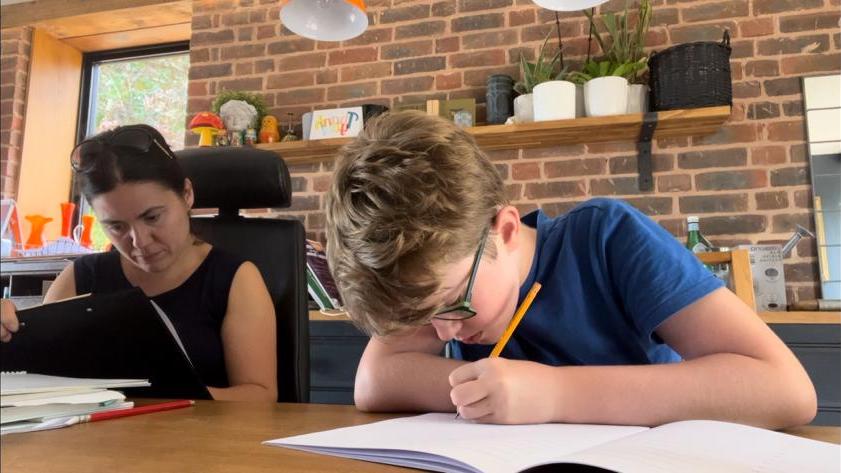
All assessments are professionally administered remotely in the comfort of your own home or face-to-face in the Tenterden office.
We offer the following assessments:
Dyslexia
Dyscalculia

Dyspraxia

Dysgraphia
What is Dyslexia?
According to the British Dyslexia Association (BDA): "Dyslexia is a learning difficulty which primarily affects reading and writing skills. However, it does not only affect these skills. Dyslexia is actually about information processing. Dyslexic people may have difficulty processing and remembering information they see and hear, which can affect learning and the acquisition of literacy skills. Dyslexia can also impact on other areas such as organisational skills. It is important to remember that there are positives to thinking differently. Many dyslexic people show strengths in areas such as reasoning and in visual and creative fields."
Our Dyslexia Assessment
Our assessment can help with early identification of needs and help explain why some children and adults may be struggling in comparison to their peers. The assessment can help to get the right support, at the right time, in the right place.
The type of assessments used depend on the needs and age of the person being assessed. A dyslexia assessment typically examines some of the following:
Phonological Awareness
Phonological Memory
Speed of Processing
General Ability
Working Memory
Spelling
Reading
Handwriting
A full detailed assessment report is produced after the assessment. This includes an outline of learning strengths, recommendations and strategies for how to improve and work on areas of weakness.
Book Now

Remote Online Full Diagnostic Dyslexia Assessment
- 7+ to Adult
- Assessments can be used for:
- Exam Access Arrangements
- DSA Report
- Workplace Arrangements
Book Now

Face-to-Face Full Diagnostic Dyslexia Assessment
- 7+ to Adult
- Assessments can be used for:
- Exam Access Arrangements
- DSA Report
- Workplace Arrangements
Book Now
What is Dyscalculia?
According to the British Dyslexia association (BDA):
Dyscalculia is a specific and persistent difficulty in understanding numbers which can lead to a diverse range of difficulties with mathematics. It will be unexpected in relation to age, level of education and experience and occurs across all ages and abilities.
“Mathematics difficulties are best thought of as a continuum, not a distinct category, and they have many causal factors. Dyscalculia falls at one end of the spectrum and will be distinguishable from other maths issues due to the severity of difficulties with number sense, including subitising, symbolic and non-symbolic magnitude comparison, and ordering. It can occur singly but often co-occurs with other specific learning difficulties, mathematics anxiety and medical conditions”.
Our Dyscalculia Assessment
Our assessment can help children and adults understand why they may be struggling in maths and numeracy. Identification can help children and adults to get the personalised support they need; this can be a huge boost confidence and self-esteem.
The type of assessments used depend on the needs and age of the person being assessed. A dyscalculia assessment typically examines some of the following:
Language/Literacy
Visual Memory
General Ability
Speed of Processing
Working Memory
Mathematical Skills
Reading
Visual Motor Integration
A full detailed assessment report is produced after the assessment. This includes an outline of learning strengths and recommendations, with strategies for how to support, manage and improve on areas of weakness.
Book Now
Remote Online Dyscalculia Assessment
- 7+ to Adult
- Assessments can be used for:
- Exam Access Arrangements
- DSA Report
- Workplace Arrangements
Book Now
Face-to-Face Dyscalculia Assessment
- 7+ to Adult
- Assessments can be used for:
- Exam Access Arrangements
- DSA Report
- Workplace Arrangements
Book Now
What is Dyspraxia?
According to the NHS: “Dyspraxia, also known as developmental co-ordination disorder (DCD), is a common disorder that affects movement and co-ordination. Dyspraxia does not affect your intelligence. It can affect your co-ordination skills – such as tasks requiring balance, playing sports or learning to drive a car”.
Our Dyspraxia Assessment
Our assessment may help someone understand why they may be struggling. Identification enables people to seek disability support through DSA funding at university, or, in the work place through the Government’s Access to Work Scheme (this includes funding and mentoring). It may help to boost confidence and self-esteem.
A dyspraxia assessment typically examines some of the following:
Fine Motor Skills (including handwriting)
Visual Motor Integration Skills
Motor Coordination Skills
Visual Perception Skills
Speed of Processing
Visual Processing
General Ability
Working Memory
Reading Speed
A full and detailed assessment report is given after the assessment. This includes an outline of learning strengths and recommendations and strategies to improve and work on areas of weakness.
Book Now
Remote Online Adult Dyspraxia Assessment
- Assessments can be used for:
- Exam Access Arrangements
- DSA Report
- Workplace Arrangements
Book Now
Face-to-Face Adult Dyspraxia Assessment
- Assessments can be used for:
- Exam Access Arrangements
- DSA Report
- Workplace Arrangements
Book Now
What is Dysgraphia?
International Dyslexia Association: "Dysgraphia is the condition of impaired letter writing by hand, that is, disabled handwriting. Impaired handwriting can interfere with learning to spell words in writing and speed of writing text. Children with dysgraphia may have only impaired handwriting, only impaired spelling (without reading problems), or both impaired handwriting and impaired spelling."
Our Dysgraphia Assessment
Our assessment can help to understand why someone may be struggling with hand writing. Identification enables people to receive appropriate support, either in education, or in the work place. It may help to boost confidence and self-esteem.
The dysgraphia assessment typically examines some of the following:
Fine Motor Skills
Detailed analysis of handwriting
Visual Motor Integration Skills
Motor Coordination Skills
Visual Perception Skills
Phonological Processing
General Ability
Working Memory
A full and detailed assessment report is given after the assessment. This includes an outline of learning strengths and recommendations and strategies to improve and work on areas of weakness.
Book Now
Remote Online Dysgraphia Assessment
- 7+ to Adult
- Assessments can be used for:
- Exam Access Arrangements
- DSA Report
- Workplace Arrangements
Book Now
Face-to-Face Dysgraphia Assessment
- 7+ to Adult
- Assessments can be used for:
- Exam Access Arrangements
- DSA Report
- Workplace Arrangements
Book Now
How remote assessments work
Use the online calender to book an assessment and make payment.
Receive all the background information and questionnaires to complete before the assessment.
24 hours before the assessment return the questionnaires.
Attend the assessment.
Within 4 weeks you will receive your assessment report.
Bespoke interventions will be offered.
Further feedback by phone, email or remote meeting can be arranged if requested.
Equipment that you will need for a remote assessment

A device with a large screen with a suitable microphone, headphone/speakers and camera. Mobile phones or small tablets are not appropriate. A laptop or desktop computer is best.
Good internet connectivity.
A quiet suitable room with a desk. If there are too many interruptions, the session would need to be rearranged.
Pencil and lined paper.
A phone (not to be used during the assessment, but available in case of connectivity issues).
Children and Teenagers will require an adult who is available in case of connectivity/technical issues.
Please wear any prescription glasses or hearing aids if needed.